
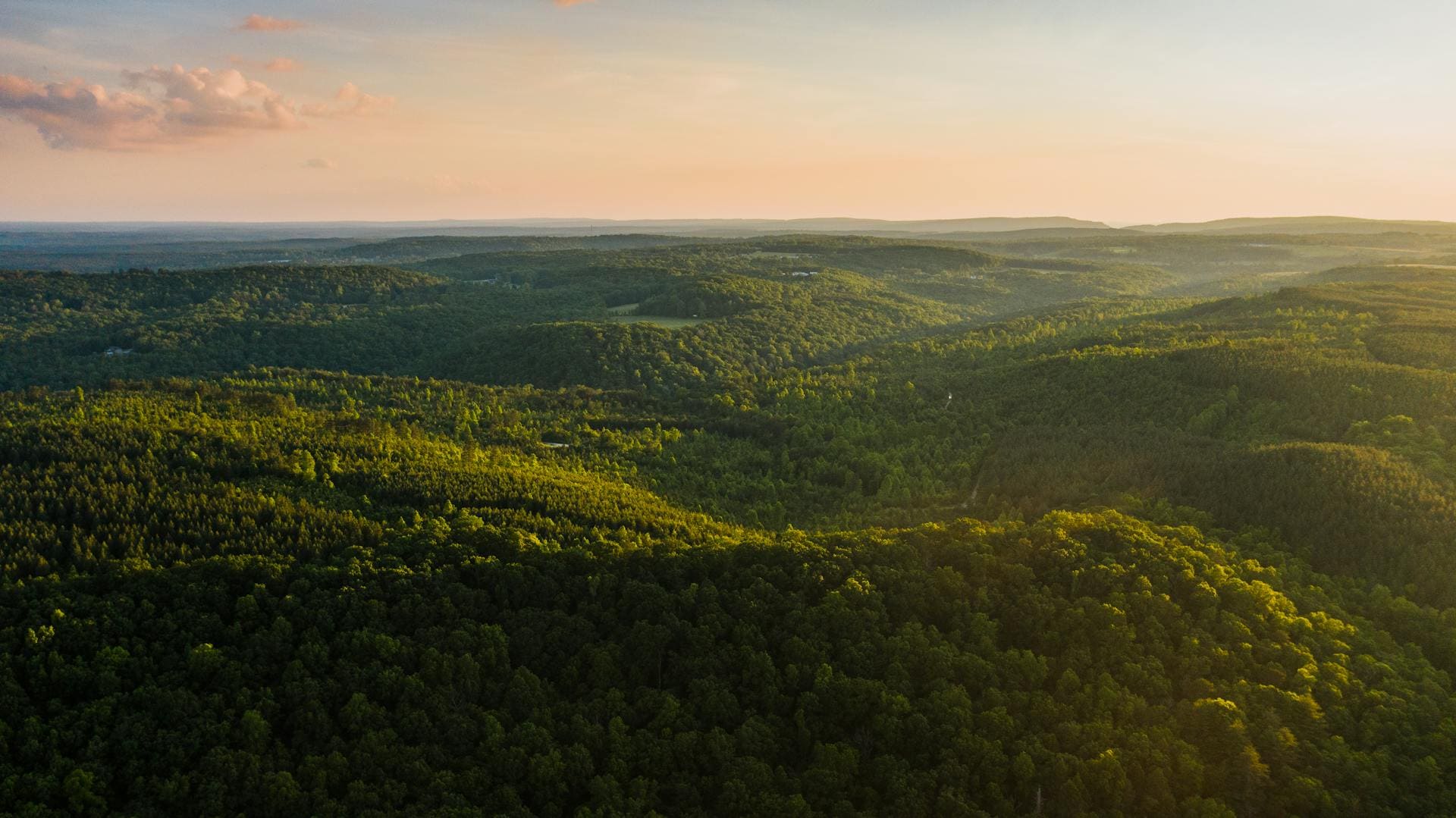
We’ve spent much of our careers working in and around the Ozarks. It’s where we live, where we work and where many of our projects have taken shape. Over time, this landscape has shaped how we think about architecture in ways no textbook ever could.

Most sites in this area come with real challenges. Steep slopes, shallow rock, dense trees, shifting water paths and changing elevations are part of the territory. Even properties that look simple on paper usually reveal unseen complexities once we’ve spent time getting to know them.
We’ve learned that forcing a building onto a site rarely works. It shows up later in higher costs, drainage issues, uncomfortable space and buildings that don’t age well. The key to avoiding this? Slowing down. We pay attention to how the land moves, where the sun falls and which parts of a site naturally support a structure and which don’t.
Some of our favorite projects started with difficult conditions. Hillsides, ridges, wooded lots and irregular boundaries can feel limiting at first, but those constraints often lead to the strongest ideas. When we work with what’s already there, the design starts to feel settled… like it belongs.
The Ozarks have also taught us about materials and longevity. Buildings here need to hold up to real seasons and real weather. Heat, humidity, cold and storms all take their toll over time. That reality encourages restraint and careful choices.
After years of working here, this landscape continues to influence how we approach every project. We don’t start with a style. We start with a site and let its conditions, character and challenges guide the design.
That process is what keeps the work interesting. Every project teaches you something new. And the Ozarks, in particular, still find ways to remind us to pay attention.
We wouldn’t trade that for anything.
